Tech Optimism and Policy Support Lift U.S. Stocks as Asia Bets on AI and Semiconductors Intensify
Keywords: U.S. stocks, AI investment, semiconductors, Tesla, Korea government, chip industry, Federal Reserve independence, global markets
Introduction
Global markets opened the week on a more optimistic note as a combination of easing geopolitical tensions, renewed enthusiasm around artificial intelligence, and fresh capital commitments to the semiconductor industry helped drive a broad rebound in risk assets. On June 29, U.S. equities finished notably higher, led by technology shares and chipmakers, while Asian policy developments reinforced the view that AI infrastructure and advanced manufacturing remain at the center of the next investment cycle.
The day’s market action reflected more than a short-term bounce. It highlighted a deeper structural theme: capital is continuing to rotate toward the companies and countries most closely tied to AI deployment, data infrastructure, and semiconductor capacity. At the same time, a major legal decision in the United States underscored the continued importance of institutional independence, particularly for the Federal Reserve, as markets weigh the path ahead for monetary policy.
U.S. Stocks Rebound as Technology Leads the Advance
U.S. equities posted a broad rally on June 29. The Dow Jones Industrial Average rose 0.59%, the S&P 500 climbed 1.18%, and the Nasdaq Composite advanced 2.07%, reflecting strong demand for growth-oriented assets. The technology sector was the clear leader, with several high-profile names posting gains that helped restore momentum after recent volatility.
Tesla surged more than 8%, while Google gained nearly 5%. Amazon rose over 3%, Meta added more than 2%, and Nvidia also moved higher. Although Microsoft and Apple closed lower, their declines were not enough to offset the strength seen across the broader tech complex. The tone of the session suggests investors remain willing to pay for companies with direct exposure to AI adoption, cloud infrastructure, and next-generation consumer platforms.
Tesla’s rally was particularly notable. Several Wall Street institutions reportedly turned more constructive on the company after its second-quarter delivery data appeared likely to exceed expectations. Analysts pointed to China and Europe as key growth engines, while Tesla’s rollout of FSD 14 Lite to owners of older HW3-equipped vehicles added to investor optimism about the company’s ability to sustain product differentiation in autonomous driving. In a market increasingly focused on execution rather than narrative alone, such operational improvements matter.
Semiconductor Stocks Turn Higher After Early Pressure
The semiconductor sector experienced intraday volatility but ultimately staged an impressive reversal. The Philadelphia Semiconductor Index finished up 3.83%, after trading lower earlier in the session. This rebound is significant because chip stocks have become a bellwether for broader confidence in AI-related capital spending.
Major names posted strong gains: Applied Materials rose nearly 11%, KLA climbed almost 12%, Lam Research advanced more than 8%, Taiwan Semiconductor Manufacturing Company gained over 5%, and ASML approached a 5% increase. AMD, Intel, and Broadcom also finished in positive territory.
This recovery suggests investors view recent weakness in chip shares as temporary rather than structural. Demand for advanced semiconductors remains tightly linked to AI servers, high-bandwidth memory, and manufacturing equipment for cutting-edge nodes. Even when macro uncertainty rises, market participants appear unwilling to abandon the sector that underpins the AI buildout. In that sense, semiconductors are not merely cyclical assets; they are increasingly strategic ones.
South Korea Signals Massive State Backing for AI and Chips
One of the most consequential developments for the global technology landscape came from South Korea. President Lee Jae-myung announced a government investment and support package exceeding 1,000 trillion won for semiconductors, physical AI, and AI data centers. The plan includes 800 trillion won for semiconductor production bases in the country’s southwest, 81 trillion won for HBM packaging facilities in the Chungcheong region, 550 trillion won for AI data centers, and 30 trillion won for next-generation semiconductor research.
The scale is remarkable. It signals that Seoul is treating AI and semiconductors not simply as industrial sectors, but as national strategic assets. In an era of supply-chain competition and technological fragmentation, countries that can secure advanced chip capacity and AI infrastructure will likely gain both economic and geopolitical leverage.
Private-sector commitments reinforced that message. Samsung Electronics and SK Group also unveiled long-term domestic investment plans totaling approximately 475.5 trillion won. Samsung’s 265.5 trillion-won plan focuses on semiconductor clusters, while SK’s 210 trillion-won investment framework includes SK Telecom’s AI data center project and SK Hynix’s AI memory production initiative.
Taken together, these announcements indicate a coordinated public-private effort to deepen Korea’s role in the global chip ecosystem. With HBM, AI servers, and next-generation memory becoming critical bottlenecks in the AI race, such investments may help secure long-term competitiveness for Korean firms.
Legal Headwinds and Governance Questions Remain
Despite the broad enthusiasm around chips, legal overhangs remain in the sector. Samsung Electronics, SK Hynix, and Micron are facing a lawsuit in the United States alleging that they manipulated memory chip prices. The plaintiffs claim the companies controlled supply and helped push DRAM prices sharply higher since 2022.
Whether or not the case ultimately gains traction, it reflects growing scrutiny over concentrated market power in essential technology inputs. As chipmakers become more central to global digital infrastructure, their pricing behavior and market influence are likely to face greater legal and regulatory attention. For investors, that means valuation models must increasingly account not only for demand growth, but also for policy and litigation risk.
Fed Independence in Focus After Supreme Court Ruling
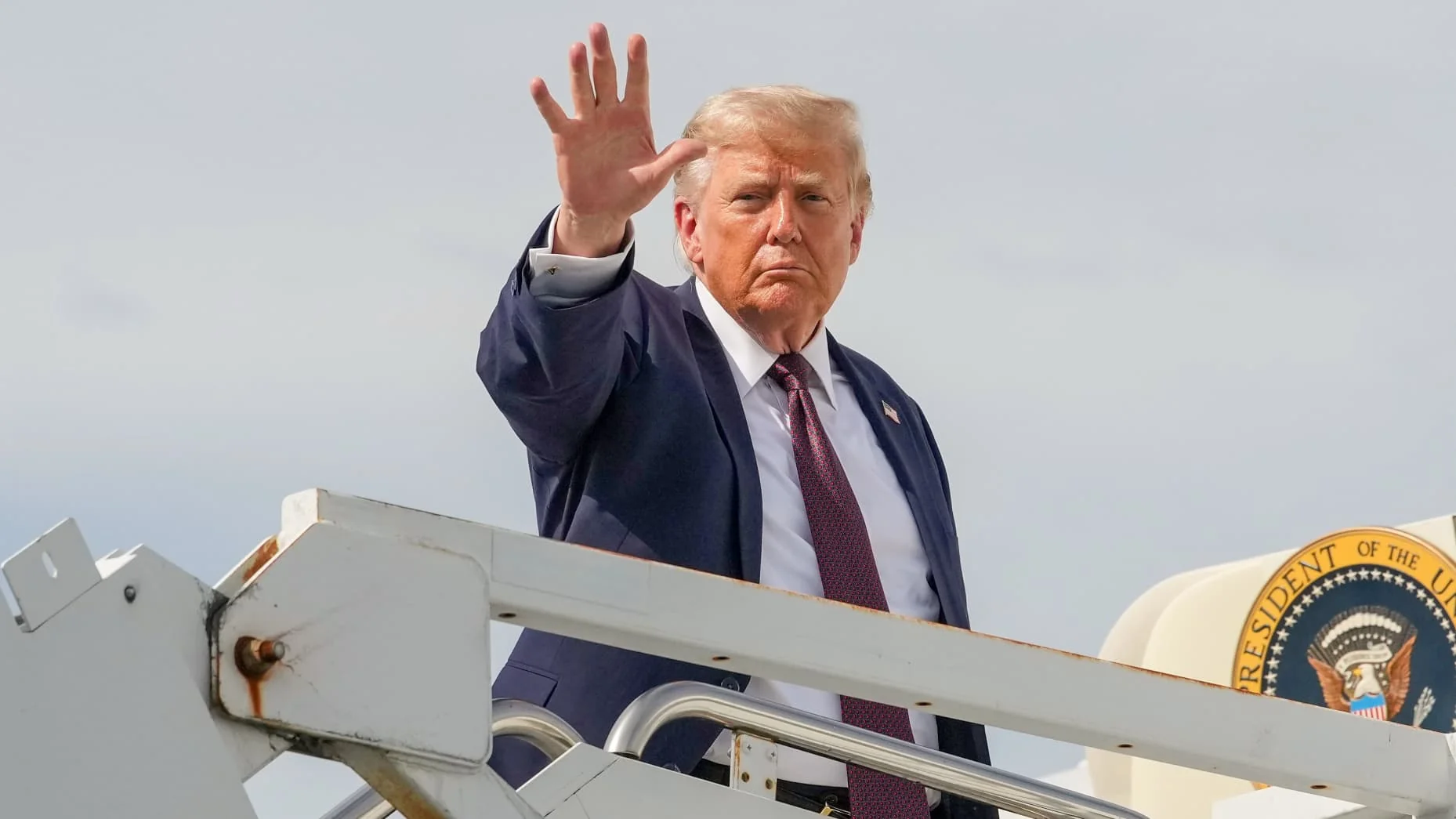
Another important development came from Washington, where the U.S. Supreme Court rejected President Trump’s request to remove Federal Reserve Governor Lisa Cook, allowing her to remain in office. Cook later said the ruling affirmed the independence of the central bank.
This decision matters beyond the immediate legal dispute. Markets rely heavily on the perception that monetary policy is insulated from political pressure. In an environment where inflation, interest rates, and financial conditions remain critical variables for asset prices, the Fed’s credibility is a major market stabilizer.
Trump had accused Cook of mortgage fraud, alleging conflicting primary residence declarations. Cook denied the allegations, arguing that the case was a political attempt to weaken the Fed’s autonomy. The court’s decision may therefore be viewed as a reaffirmation of institutional boundaries at a time when investors are especially sensitive to policy unpredictability.
Conclusion
The latest market moves show that investors are still willing to embrace risk when the right catalysts align: easing geopolitical tensions, stronger-than-expected tech performance, and visible policy support for AI and semiconductors. U.S. equities rallied broadly, chipmakers recovered strongly, and Korean policymakers signaled a large-scale commitment to future-facing industries.
At the same time, the week’s events also served as a reminder that market leadership increasingly depends on more than earnings. It is shaped by industrial policy, legal clarity, central bank independence, and the strategic allocation of capital across the AI value chain. For now, the message from markets is clear: the next phase of growth is likely to be built on chips, data, and intelligent systems—and investors are positioning accordingly.