

U.S. Equities at a Geopolitical Crossroads: What Investors Should Watch
Keywords: U.S. stocks, equity markets, geopolitical risk, Federal Reserve, interest rates, sector rotation, risk sentiment, market outlook
Introduction
U.S. equities continue to sit at the center of global capital markets. When Wall Street rises or stumbles, the effects are rarely confined to domestic investors alone; they ripple through currencies, commodities, bond yields, and international risk appetite. In recent months, the market has been shaped by a complicated mix of inflation expectations, Federal Reserve policy, corporate earnings resilience, and an increasingly uncertain geopolitical backdrop.
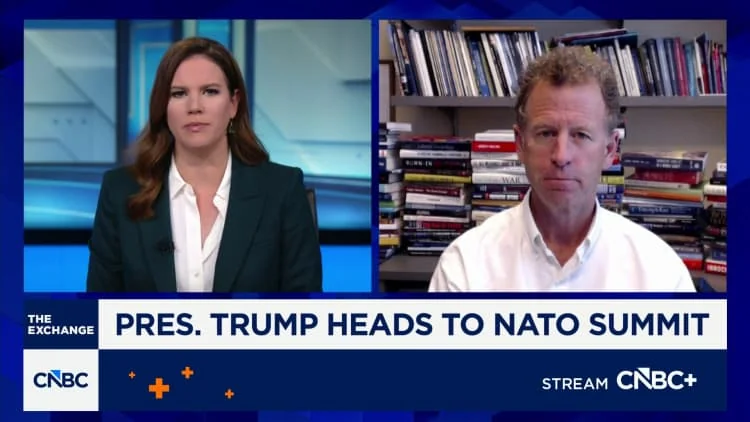
That uncertainty matters more than many investors realize. Equity prices do not move only on earnings and valuation metrics; they also respond to the perceived stability of the global order. Developments involving NATO, Russia, and major political actors can alter expectations for defense spending, energy prices, supply chains, and investor confidence. In this context, U.S. stocks are not merely a reflection of economic fundamentals—they are also a barometer of geopolitical stress.
Market Structure: Why U.S. Stocks Remain the Global Benchmark
The U.S. stock market retains a unique position because of its depth, liquidity, and concentration of world-leading companies. From technology giants and financial institutions to industrial leaders and consumer brands, the American equity market offers exposure to innovation, scale, and global demand. Even during periods of turbulence, international investors often treat U.S. stocks as the default destination for capital seeking both growth and relative safety.
This status is reinforced by several structural advantages:
- A diverse corporate base – The market is not driven by a single sector, although technology has become increasingly influential.
- Strong profit margins – Many U.S. firms have pricing power, global operations, and advanced balance sheets.
- Deep institutional participation – Pension funds, mutual funds, sovereign wealth funds, and ETFs provide consistent liquidity.
- Information efficiency – Markets tend to react quickly to new data, helping prices adjust faster than in many other regions.
Yet this resilience should not be confused with immunity. U.S. equities are highly sensitive to shifts in monetary policy and international tensions. The market may look stable on the surface while internal leadership changes dramatically beneath it.
Geopolitical Risk and Its Transmission to Equities
The relationship between geopolitics and stocks is often indirect but powerful. A headline about NATO tensions, Russian confrontation, or a diplomatic shift involving Turkey may not immediately depress the S&P 500, but it can influence several key channels that matter for investors.
1. Energy Prices and Inflation Expectations
Geopolitical friction frequently leads to volatility in oil and natural gas markets. If traders anticipate supply disruption or sanctions-related constraints, energy prices may rise. Higher energy costs can feed into inflation, which in turn affects bond yields and discount rates. For equity markets, this is crucial: higher yields generally pressure growth stocks, especially those with valuations based on future cash flows.
2. Defense and Industrial Spending
Periods of international strain often benefit defense contractors, aerospace firms, cybersecurity providers, and logistics companies. Investors begin to price in greater government spending, modernization programs, and strategic stockpiling. This does not mean the broader market improves, but rather that leadership rotates toward sectors perceived as beneficiaries of uncertainty.
3. Risk Appetite and Capital Allocation
When geopolitical headlines intensify, investors may reduce exposure to cyclical assets and move into defensive sectors such as utilities, healthcare, and consumer staples. Gold, Treasury bonds, and cash positions may also gain favor. In this environment, market breadth often narrows, meaning a handful of mega-cap names can hold the index up while the broader market weakens.
4. Supply Chain and Trade Exposure
For multinational U.S. companies, geopolitical strain can disrupt shipping routes, procurement, and cross-border investment flows. Firms with heavy international revenue exposure may face greater uncertainty in earnings forecasts. This is especially relevant for semiconductor, industrial, and consumer discretionary companies with meaningful non-U.S. operations.

The Federal Reserve Still Dominates the Near-Term Outlook
Although geopolitics matters, it does not replace the Federal Reserve as the primary driver of U.S. equity valuation. Interest rates remain the central variable in the market’s current framework. If inflation proves sticky, the Fed may keep policy restrictive for longer, compressing valuation multiples. If inflation cools and labor-market conditions soften moderately, investors may begin to anticipate rate cuts, which usually support equities.
The challenge is that market participants often attempt to price several scenarios at once. A soft landing narrative can coexist with worries about inflation persistence, weak earnings guidance, and global instability. This creates a market environment in which volatility persists even when the major indexes appear stable.
Investors should pay attention to three metrics in particular:
- Treasury yields: A rising 10-year yield can pressure equity valuations, especially in growth sectors.
- Inflation data: Core inflation trends shape the Fed’s credibility and policy path.
- Labor market signals: Employment resilience supports consumption, but excessive tightness may keep rates elevated.
In this sense, U.S. stocks are functioning within a dual framework: monetary policy sets the valuation ceiling, while geopolitics influences the risk premium.
Earnings Still Matter — But Not Equally Across Sectors
A strong earnings season can stabilize sentiment even in uncertain times. However, not all earnings are interpreted the same way. In a market environment shaped by elevated macro risk, investors reward companies that can demonstrate three traits:
- Predictable cash flow
- Pricing power
- Limited dependence on fragile supply chains
Large-cap technology firms, for instance, may remain market leaders because of their earnings scale and structural growth narratives. However, if bond yields rise too quickly, even these names can face multiple compression. Meanwhile, financials may benefit from a steeper yield curve, but credit concerns could offset that advantage if recession fears intensify.
The most vulnerable companies are often those with weak margins, high leverage, or limited ability to pass through costs. In a geopolitical stress scenario, such firms can underperform sharply, especially if investors believe input prices or logistical bottlenecks will persist.
Sector Rotation: Where Capital Tends to Move
In periods of uncertainty, the market rarely moves in a straight line. Instead, capital tends to rotate. Understanding this pattern is essential for interpreting U.S. stock behavior.
Defensive Sectors
Healthcare, consumer staples, and utilities often attract inflows when investors seek stability. Their business models are less sensitive to short-term swings in global growth or trade friction.
Energy and Defense
If geopolitical risk leads to tighter energy markets or greater military spending, these sectors can outperform. Investors often treat them as tactical hedges against instability.
Quality Growth
High-quality technology and communications companies may continue to command premium valuations, but only when rate pressure remains manageable. Their long-duration cash flows make them more vulnerable when yields rise.
Small Caps
Smaller U.S. companies are often the most sensitive to domestic credit conditions and economic cycles. They can outperform when the market anticipates lower rates, but they are typically less resilient in risk-off environments.
The broader message is that the market may look “up” or “down” in index terms while still undergoing a major internal reshuffling of leadership.
What Investors Should Monitor Next
A disciplined approach to U.S. equities requires attention to both macro and micro signals. The following indicators deserve close monitoring:
- Bond yields and the yield curve – These shape equity valuations and recession expectations.
- Inflation releases – They determine how much room the Fed has to ease policy.
- Earnings guidance – Forward commentary often matters more than backward-looking results.
- Geopolitical developments – Any escalation involving NATO, Russia, or strategic transit regions can rapidly alter market sentiment.
- Sector breadth – A narrow rally can be more fragile than a broadly supported advance.
Investors should also be careful not to overreact to a single headline. Geopolitical stories often generate immediate volatility but only occasionally produce durable market repricing. The key is distinguishing between noise and a genuine shift in fundamentals.
Conclusion
U.S. stocks remain the world’s most important equity market, but their trajectory is being shaped by forces that extend well beyond corporate earnings. Monetary policy, inflation, and bond yields still anchor the valuation debate, yet geopolitical uncertainty adds another layer of complexity. Tensions involving NATO, Russia, and wider strategic alignments can influence energy costs, defense spending, risk sentiment, and sector leadership.
For investors, the most prudent approach is to remain selective rather than reactive. In a market where macro conditions and geopolitics intersect, quality balance sheets, durable earnings power, and sector awareness matter more than ever. The U.S. equity market is unlikely to lose its central role in global finance, but the path forward may be uneven, with periodic swings driven by both policy expectations and international headlines.
In short, the message for investors is clear: U.S. stocks are still attractive, but the margin for error is narrower than usual. Success will depend not only on reading earnings reports and Fed statements, but also on understanding how the world’s political tensions continue to shape market behavior.