

S&P 500 Index Breaks All-Time High: In-depth Analysis of October 2026 Market Trends
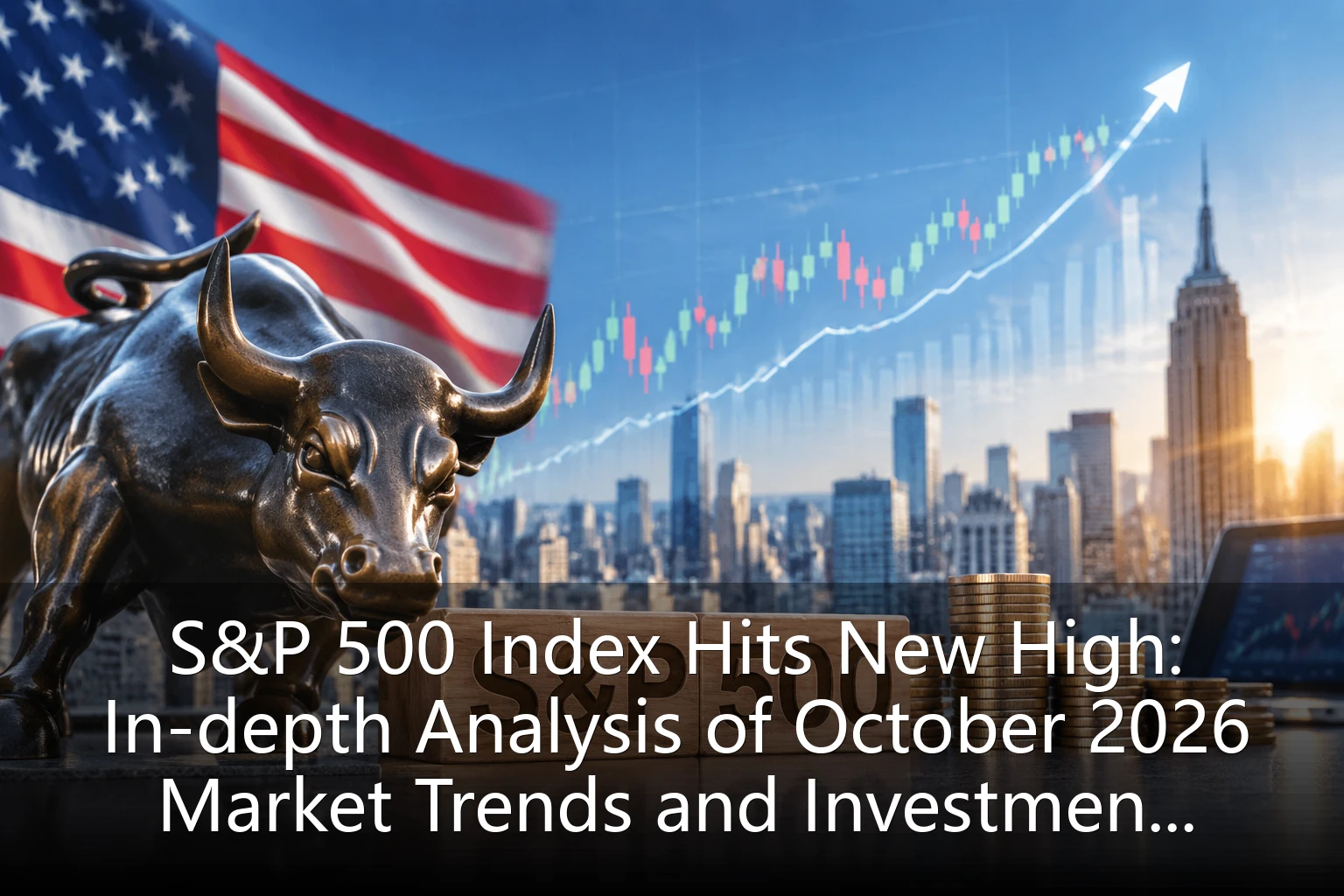
In early October 2026, the US stock market once again reached a historic moment as the S&P 500 Index (SPX) broke through its all-time high, marking the market's return to an upward trajectory after months of volatile adjustments. This important milestone not only reflects the resilience of the US economy but also reveals the continued confidence of global investors in US assets. This article will conduct an in-depth analysis of the driving factors behind the S&P 500's new high, changes in market structure, and future investment strategies, providing investors with comprehensive market insights.
Key Drivers Behind the S&P 500 Index's New High
The breakthrough of the S&P 500 Index in early October 2026 was not accidental but the result of multiple factors working together. First, the better-than-expected performance of US corporate earnings was the core driver pushing the index higher. According to the latest earnings data, the average profit growth of S&P 500 component companies in the second quarter reached 8.5%, far exceeding the market expectation of 6.2%. The strong performance of particularly technology, healthcare, and industrial sectors provided solid support for the index.
Second, inflation data shows that the US economy is achieving a "soft landing." The CPI rose 3.1% year-on-year in September, a significant decrease from 6.2% at the beginning of the year, while the unemployment rate remained at a relatively healthy level of 4.2%. Although this combination of "high inflation, low unemployment" is rare, it has created conditions for the Federal Reserve to maintain interest rate stability, reducing market concerns about aggressive monetary policy.
Third, continued capital inflows into the US stock market from global investors is also an important driving factor. As economic growth in Europe slows and China faces structural challenges, the relative attractiveness of US assets has significantly increased. Data shows that in the third quarter of 2026, foreign investors' net purchases of US stocks reached a record $120 billion, with a significant portion flowing into S&P 500 component stocks.
Sector Rotation: The Ebb and Flow of Technology and Defensive Sectors
During the S&P 500 Index's rise to a new high, sector rotation characteristics were evident. The technology sector, especially AI-related companies, remained the main market driver. Tech giants like NVIDIA (NVDA), Microsoft (MSFT), and Google (GOOGL) continued to lead the market, with their combined market capitalization accounting for about 15% of the S&P 500 Index. These companies benefited from the widespread application of AI technology and increased capital expenditures, showing strong performance.
However, it's worth noting that the relative performance of defensive sectors such as utilities, consumer staples, and healthcare is also improving. This "cooling tech, warming defensive" sector rotation reflects a shift in market sentiment. As the interest rate environment stabilizes, the dividend appeal of defensive sectors has regained investor favor. Data shows that defensive sectors outperformed growth sectors by about 2 percentage points in the third quarter, the best relative performance since 2022.
The performance of industrial and financial sectors showed divergence. The industrial sector benefited from global supply chain restructuring and the reshoring of manufacturing to the US, showing solid performance; while the financial sector was pressured by narrowing net interest margins, showing relatively weak performance. This differentiation between sectors makes the internal structure of the S&P 500 more diversified, reducing overall market volatility.
Market Structure Changes: The Game Between Institutional Investors and Retail Investors
Behind the S&P 500 Index's new high, market structure is also undergoing profound changes. Institutional investors continue to dominate the market, but their investment strategies are adjusting. Large pension funds and sovereign wealth funds are increasing their allocation to index ETFs and reducing stock selection. This "passivization" trend has reduced market volatility.
At the same time, the participation of retail investors is also increasing. With the popularization of zero-commission trading and mobile trading, retail investors' participation in the US stock market has reached a historical high. However, unlike institutional investors, retail investors tend to chase hot stocks and thematic investments, and this "retailization" trend has increased short-term market volatility.
Changes in the options market are also noteworthy. In the third quarter of 2026, the average daily trading volume of S&P 500 index options increased by 35% year-on-year, with a significant portion being complex derivative strategies. This institutionalized derivative trading both provides market liquidity and increases market complexity, placing higher demands on ordinary investors.
Investment Strategies: How to Seize New Opportunities in the S&P 500 Index
Facing the market environment where the S&P 500 Index has hit a new high, investors need to adjust their strategies to adapt to new market conditions. First, diversified allocation remains key. Although the technology sector is performing strongly, the risk of over-concentration cannot be ignored. Investors are advised to maintain core technology positions while appropriately increasing allocations to defensive sectors and high-quality value stocks.
Second, using ETFs to participate in the market is a wise choice. For most investors, participating in the market through S&P 500 index ETFs (such as SPY, IVV) or sector ETFs is more efficient than directly selecting individual stocks. Especially for investors who want to gain exposure to specific sectors, sector ETFs provide a convenient and low-cost tool.
Third, volatility management has become particularly important. As the market hits new highs, volatility may rise at any time. Investors should consider using options strategies to hedge risks, such as protective put strategies or covered call strategies. These strategies can provide downside protection for the investment portfolio without giving up opportunities for market upside.
Future Outlook: The Next Stop for the S&P 500 Index
Looking ahead, the S&P 500 Index is expected to continue its upward trend, but the growth rate may slow. First, corporate profit growth is expected to moderate, gradually decreasing from 8.5% in the third quarter of 2026 to around 5% in the first quarter of 2027, but will remain healthy.
Second, the direction of Federal Reserve policy will be crucial. If inflation continues to decline as expected, the Fed may begin cutting interest rates in 2027, which will further boost market valuations. However, any policy surprises could lead to market adjustments, and investors need to closely monitor Fed signals.
Third, geopolitical risks cannot be ignored. Factors such as global trade tensions and regional conflicts could impact the market. Especially against the backdrop of the US presidential election, policy uncertainty increases, and investors need to be prepared to handle various scenarios.
Conclusion: Finding Balance in New Highs
The S&P 500 Index breaking its all-time high reflects market confidence in the US economy and corporate America, but investors should not be blindly optimistic. In the current market environment, balancing growth and risk, seizing sector rotation opportunities, and managing volatility will be key to successful investing.
For long-term investors, the S&P 500 Index remains a core tool for building investment portfolios. Through strategies like regular fixed-amount investments, diversified allocation, and long-term holding, investors can share in the fruits of US economic growth while reducing the impact of short-term volatility.
In conclusion, the S&P 500 Index hitting a new high in October 2026 is not only a milestone for the market but also an opportunity to adjust investment strategies. While seizing market opportunities, investors need to remain rational and manage risks well to respond to possible market changes in the future. As investment legend Warren Buffett said: "Be fearful when others are greedy, and greedy when others are fearful." On the day the S&P 500 Index hits a new high, maintaining appropriate caution may be a wise move.